
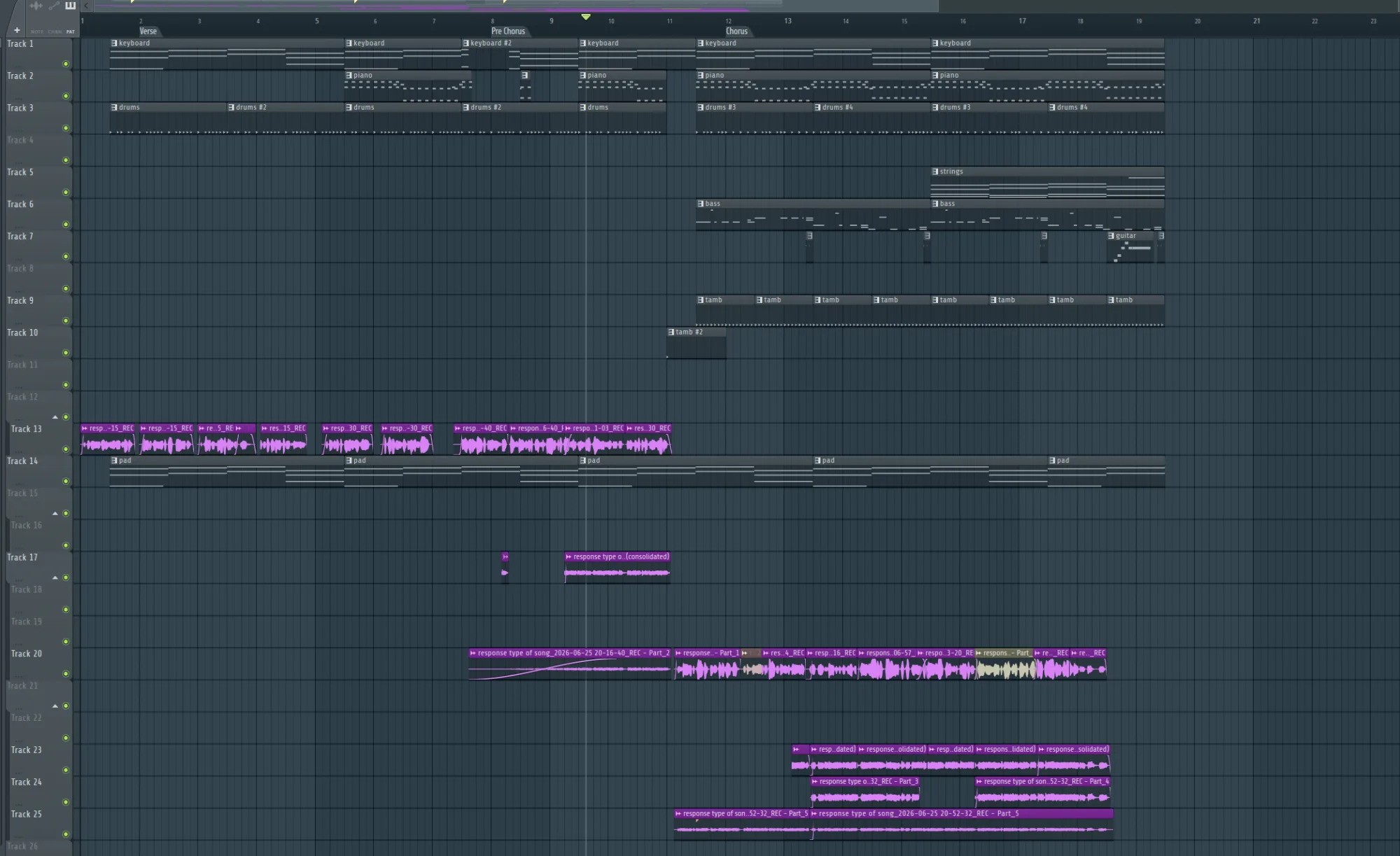
I have a point that’s very specific where songs stop being written.
I would get the first verse, pre chorus, and chorus done. Once I have all three, I get this feeling like I have accomplished enough for the whole day.
Which I have, to be fair.
I then close my DAW (which is FL Studio by the way) and do other things. I try to make myself feel proud of what I already made rather than thinking about what’s next. The first verse, pre chorus, and chorus are finished, I will continue later.
However, “later” turns into a long time.
I would work on another project, then days pass, then after that it’s a few more. Then, the song eventually turns into one of those projects I know I have to come back to, and then when I open it again, I lost that specific feeling that made me decide to write the song.
(This is a work in progress)